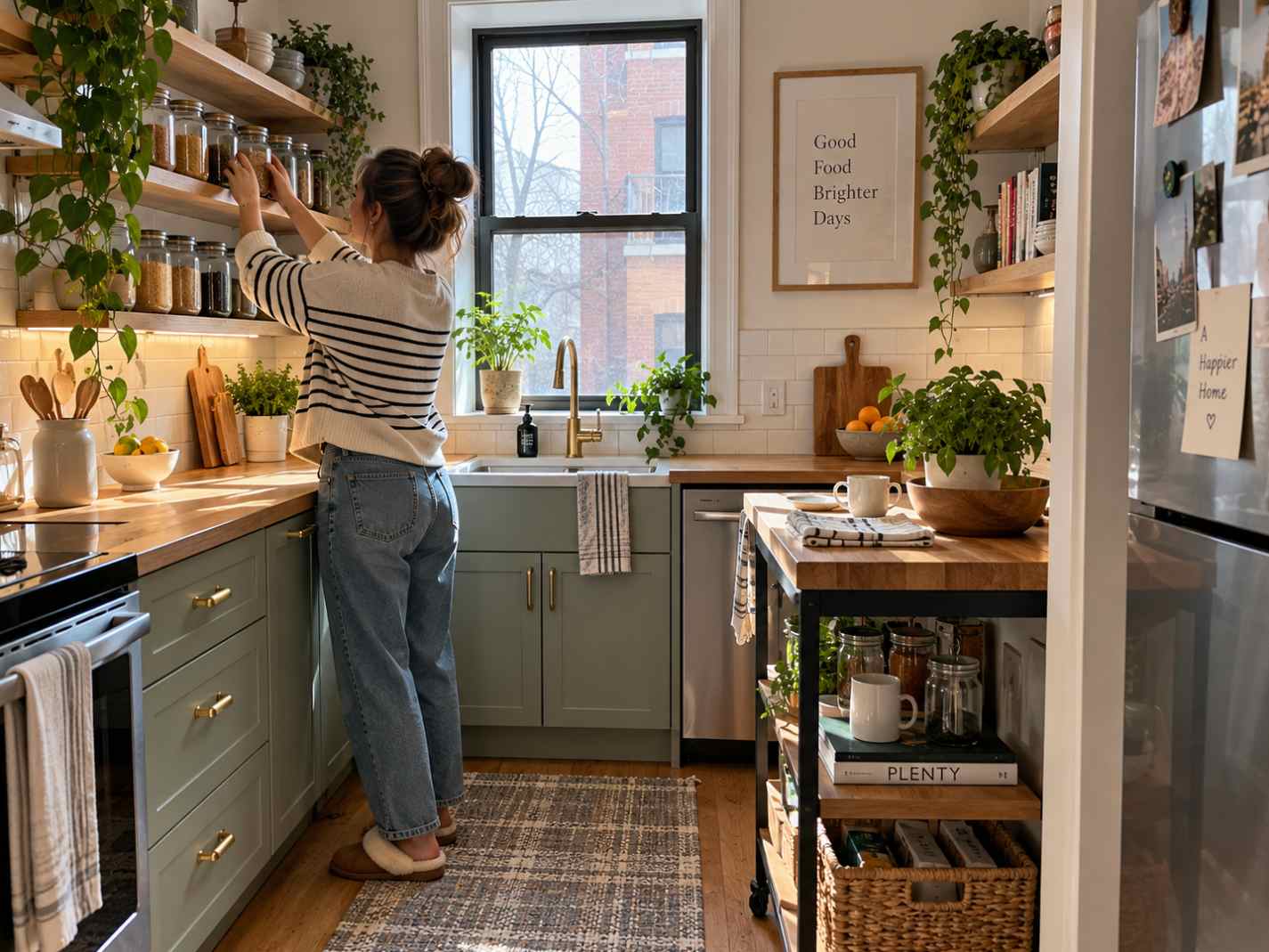
A small or cluttered kitchen can quickly feel frustrating. Even when the room itself is not especially tiny, crowded countertops, overfilled cabinets, and poorly used storage can make the space feel much smaller than it really is.
The good news is that you do not necessarily need more square footage.
Smart kitchen organisation can make a dramatic difference by improving how you use cabinets, drawers, walls, corners, and countertops. When everyday items have a clear place, the kitchen feels calmer, brighter, and much easier to use.
Whether you live in a compact apartment, a family home, or a smaller UK flat, these kitchen organisation ideas can help your space feel bigger and more functional.
1. Clear as Much as Possible from the Countertops
Countertops are one of the first things you notice when you enter a kitchen.
When they are covered with:
- appliances
- jars
- utensils
- paperwork
- cleaning products
the entire room can feel crowded.
Keep only the items you use most often on display.
Everything else should have a home inside:
- cabinets
- drawers
- baskets
- pantry shelves
A clearer countertop instantly creates more visual space.
2. Store Small Appliances Away When Possible
Toasters, blenders, coffee makers, air fryers, and mixers can quickly take over a small kitchen.
If you do not use an appliance every day, consider storing it inside a cabinet.
Keep only your most frequently used appliances visible.
This creates more usable preparation space and makes the kitchen look more organised.
3. Use Drawer Dividers
Kitchen drawers can become messy surprisingly quickly.
Use dividers to organise:
- cutlery
- cooking utensils
- measuring spoons
- kitchen tools
- small gadgets
When everything has a defined space, drawers become much easier to use.
It also prevents you from buying duplicate items because you can see exactly what you already own.
4. Add Shelf Risers Inside Cabinets
Many kitchen cabinets have unused vertical space.
Shelf risers create an additional level for:
- plates
- bowls
- mugs
- canned goods
Instead of stacking everything into one tall pile, you can create separate layers.
This makes items easier to see and access.
5. Use Clear Storage Containers
Clear containers make it easier to see what you have.
They work especially well for:
- pasta
- rice
- cereal
- flour
- snacks
- baking ingredients
Using similar containers can also make shelves feel more organised and visually calm.
In smaller kitchens, reducing visual clutter can make the room feel much more spacious.
6. Organise Food by Category
Instead of placing groceries wherever they fit, group similar items together.
For example:
- breakfast foods
- baking supplies
- snacks
- canned goods
- sauces
- pasta and grains
This makes it easier to find what you need and prevents shelves from becoming chaotic.
7. Use Baskets for Loose Items
Baskets are useful for grouping smaller items.
Try separate baskets for:
- snacks
- tea and coffee
- cleaning products
- food storage bags
- baking supplies
You can simply pull out the entire basket instead of searching through the back of a cupboard.
8. Make Use of Cabinet Doors
The inside of cabinet doors is often wasted space.
Use it for:
- small racks
- measuring spoons
- pot lids
- cleaning cloths
- lightweight kitchen tools
Door-mounted storage helps free up shelves and drawers.
Always make sure the organiser does not prevent the cabinet door from closing properly.
9. Add an Under-Sink Organiser
The area underneath the kitchen sink can easily become messy.
Use:
- pull-out drawers
- baskets
- stackable shelves
- labelled containers
Organise products by purpose.
For example:
- everyday cleaning
- dishwasher supplies
- spare sponges
Keeping this area tidy can create a surprising amount of additional storage.
10. Use a Lazy Susan for Difficult Corners
A rotating tray can make deep cabinets much easier to use.
It works well for:
- oils
- sauces
- condiments
- spices
- cleaning products
Instead of reaching into the back of a cupboard, simply rotate the tray.
11. Install Pull-Out Cabinet Organisers
Deep cabinets often hide items at the back.
Pull-out organisers make the entire cabinet accessible.
They work particularly well for:
- pots
- pans
- canned food
- cleaning supplies
This can make an awkward cabinet feel much more functional.
12. Store Pots and Pans Vertically
Stacking pots and pans can become frustrating.
Instead, use a rack to store them vertically.
You can also organise:
- baking trays
- cutting boards
- frying pans
- muffin tins
Vertical storage allows you to remove one item without moving everything else.
13. Organise Pot Lids Separately
Pot lids are often difficult to store because they slide around.
Use:
- lid racks
- drawer dividers
- cabinet door organisers
Keeping lids upright saves space and makes them much easier to find.
14. Use the Space Above Cabinets
If your kitchen cabinets do not reach the ceiling, the area above them can provide useful storage.
Use attractive baskets or boxes for:
- seasonal serving dishes
- rarely used appliances
- spare kitchen supplies
Avoid filling the space with too many random objects, as this can make the kitchen feel cluttered.
15. Maximise Vertical Wall Space
Small kitchens often have limited floor space but plenty of unused wall space.
Consider:
- floating shelves
- rails
- wall-mounted racks
- magnetic knife strips
These options can free up counters and drawers.
16. Add Open Shelves Carefully
Open shelves can make a kitchen feel lighter than large upper cabinets.
Use them for attractive everyday items such as:
- plates
- glasses
- mugs
- bowls
- small plants
Keep the styling simple.
Too many items on open shelves can create the opposite effect and make the room feel busier.
17. Use a Magnetic Knife Strip
A magnetic strip can remove bulky knife blocks from the countertop.
It also keeps knives easy to reach.
Install it securely in a safe location away from children.
18. Add a Wall Rail for Utensils
A simple rail can hold:
- cooking spoons
- small pans
- kitchen towels
- measuring cups
This frees up drawer space while keeping frequently used items nearby.
19. Use the Side of Your Refrigerator
The side of the refrigerator can become useful storage space.
Magnetic organisers can hold:
- spices
- paper towels
- kitchen notes
- small utensils
This is especially helpful in kitchens with very limited cabinet space.
20. Create a Dedicated Coffee or Tea Station
Coffee and tea supplies can easily spread across the kitchen.
Create one small area for:
- coffee machine
- mugs
- tea bags
- coffee pods
- sugar
Keeping everything together reduces clutter elsewhere.
21. Use Tiered Spice Organisers
A spice cupboard can become difficult to manage when jars are hidden behind one another.
Tiered shelves allow you to see every spice at once.
Other options include:
- drawer spice inserts
- magnetic spice racks
- rotating organisers
Choose the system that fits your kitchen layout.
22. Move Rarely Used Items Higher Up
Store everyday items within easy reach.
Move less frequently used items such as:
- special serving dishes
- holiday cookware
- large roasting pans
to higher shelves.
This makes prime storage space available for things you actually use every day.
23. Keep Everyday Items at Eye Level
Organisation should make the kitchen easier to use.
Store frequently used items where you can reach them quickly.
For example:
- everyday plates
- bowls
- glasses
- cooking oils
should not require a step stool or deep cabinet search.
24. Add a Slim Rolling Cart
A narrow rolling cart can fit into small gaps beside:
- refrigerators
- cabinets
- kitchen islands
Use it for:
- pantry items
- spices
- drinks
- cleaning supplies
Because it moves easily, it is flexible enough for small spaces.
25. Use Stackable Storage
Stackable containers make better use of cabinet height.
They are useful for:
- pantry goods
- refrigerator storage
- lunch boxes
- food containers
Choose containers designed to stack securely.
26. Organise Food Storage Containers
Plastic containers and lids can quickly become one of the messiest parts of a kitchen.
Store:
- containers nested together
- lids vertically
- matching sets nearby
Remove damaged or mismatched pieces you no longer use.
27. Use a Plate Rack
Plate racks allow dishes to be stored vertically rather than stacked.
This can make them:
- easier to access
- better organised
- less likely to shift
They are particularly useful in smaller cabinets.
28. Create Zones Based on Kitchen Tasks
One of the most effective ways to organise a kitchen is by activity.
Create separate zones for:
- food preparation
- cooking
- coffee and drinks
- baking
- cleaning
Store related items close to where they are used.
For example, keep:
- cooking oils near the stove
- mugs near the coffee machine
- cutting boards near the preparation area
This improves both organisation and efficiency.
29. Keep Cleaning Products Together
Cleaning supplies can take up more space than expected.
Create one dedicated area for:
- sprays
- cloths
- sponges
- dishwasher products
Avoid keeping multiple half-used bottles of the same product.
30. Declutter Duplicate Kitchen Tools
Many kitchens contain duplicates that are rarely needed.
You may not need:
- four bottle openers
- six wooden spoons
- multiple peelers
- several measuring sets
Keep your favourites and remove the rest.
Reducing unnecessary items often creates more space than buying new organisers.
31. Use Matching Jars for Frequently Used Ingredients
If you enjoy keeping ingredients visible, matching jars can make the countertop feel more intentional.
Use them for:
- coffee
- sugar
- flour
- tea
Keep the number limited so the countertop still feels open.
32. Organise the Refrigerator
A well-organised fridge can save both space and food.
Use:
- clear bins
- shelf organisers
- designated produce areas
Group similar foods together.
For example:
- dairy
- sauces
- snacks
- vegetables
This makes it easier to see what needs to be used.
33. Avoid Overfilling Cabinets
An organised cabinet does not need to be completely full.
Leaving some empty space makes items easier to:
- see
- remove
- return
Overfilled storage often becomes disorganised again very quickly.
34. Choose Closed Storage for Visual Clutter
Not everything needs to be displayed.
Use closed cabinets for:
- packaged food
- cleaning supplies
- appliances
- mismatched kitchen tools
Keep open shelves for attractive items.
This creates a calmer overall appearance.
35. Use Light Colours to Create an Open Feeling
Organisation can make a kitchen function better, while colour can make it feel visually bigger.
Light colours such as:
- white
- cream
- soft beige
- pale grey
can reflect light and make a compact kitchen feel more open.
You do not need a full renovation.
Even lighter:
- towels
- storage containers
- rugs
- accessories
can help.
36. Add Better Lighting
Dark corners can make a kitchen feel smaller.
Consider adding:
- under-cabinet lights
- small lamps
- brighter task lighting
Good lighting makes storage areas easier to use and creates a more spacious feeling.
37. Keep the Sink Area Simple
The sink area can quickly look crowded.
Keep only essentials nearby:
- hand soap
- dish soap
- sponge
Store extra products underneath the sink.
A cleaner sink area makes the entire kitchen look more organised.
38. Create a Home for Paperwork
Mail, receipts, and household paperwork often end up on kitchen counters.
Use:
- a wall file
- small tray
- drawer organiser
to keep paperwork contained.
Better still, process it regularly so it does not become permanent kitchen decor.
39. Use a Foldable or Extendable Dining Table
In an eat-in kitchen, a large dining table can dominate the room.
For smaller spaces, consider:
- drop-leaf tables
- extendable tables
- wall-mounted tables
These allow you to create more open space when the table is not being used.
40. Keep the Floor as Clear as Possible
Too many objects on the floor can make a kitchen feel cramped.
Avoid leaving:
- shopping bags
- boxes
- cleaning equipment
in walkways.
A clear floor creates better flow and makes the kitchen feel larger.
Best Kitchen Organisation Ideas for Small Apartments
If your kitchen is particularly compact, start with the changes that create the most space:
- clear the countertops
- use vertical wall storage
- add shelf risers
- organise cabinet doors
- use under-sink storage
- add a slim rolling cart
- declutter duplicates
These changes usually provide a noticeable improvement without requiring a renovation.
Best Kitchen Organisation Ideas for Renters
If you rent, focus on flexible solutions such as:
- freestanding shelves
- magnetic organisers
- over-door storage
- rolling carts
- removable hooks
- drawer dividers
- cabinet shelf risers
Check your lease or tenancy agreement before drilling into walls or making permanent changes.
How to Make a Small Kitchen Look Less Cluttered
Keep Surfaces Mostly Clear
Visible empty space helps the kitchen feel larger.
Limit Items on Display
Choose only a few attractive everyday items.
Use Similar Storage Containers
A consistent look reduces visual noise.
Hide Packaging When Practical
Clear or simple containers can make open pantry shelves look calmer.
Create Defined Zones
When everything has a clear purpose and location, the room feels more organised.
Kitchen Organisation Mistakes to Avoid
Buying Organisers Before Decluttering
Do not organise items you no longer need.
Declutter first.
Choosing Storage That Is Difficult to Access
If a storage solution requires too much effort, you are less likely to maintain it.
Filling Every Available Space
More storage is not always better.
Leaving some room makes the kitchen easier to use.
Keeping Too Much on the Countertops
Even attractive items can create clutter when there are too many of them.
Ignoring Your Daily Habits
The best kitchen organisation system should match how you actually cook, eat, and clean.
Final Thoughts
A kitchen does not need to be large to feel spacious.
Good organisation can transform the way the room looks and functions by reducing clutter, improving storage, and making everyday items easier to reach.
Start with the simplest changes: clear the countertops, organise drawers, make better use of vertical space, and remove items you no longer need.
The goal is not to create a perfectly styled kitchen that never looks lived in. It is to create a space that feels calm, functional, and easy to enjoy every day.