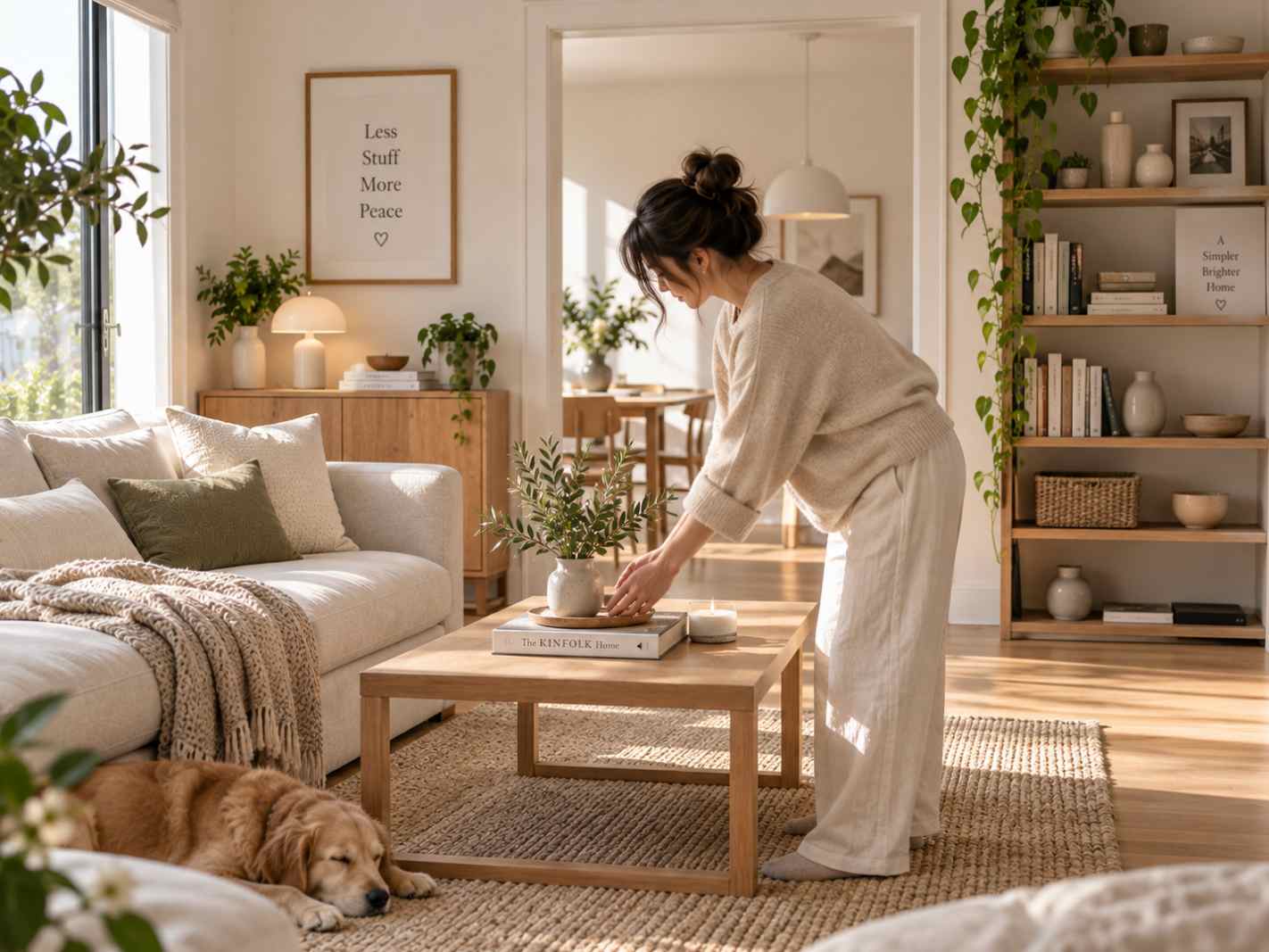
A minimalist lifestyle is not about living in an empty white room or getting rid of everything you own.
At its best, minimalism is about creating more space for the things that genuinely matter.
That may mean:
- fewer unnecessary possessions
- calmer rooms
- easier routines
- more intentional purchases
- less visual clutter
A peaceful home should make everyday life feel simpler, not more restrictive.
You do not have to become an extreme minimalist to benefit from the idea. Even a few thoughtful changes can make your home feel lighter, more organised, and easier to enjoy.
Here is how to create a more peaceful home through a practical minimalist lifestyle.
1. Start with Your Reason for Wanting Less
Before decluttering anything, think about why you want a simpler home.
Maybe you want:
- less cleaning
- easier organisation
- more space
- fewer distractions
- a calmer atmosphere
Having a clear reason makes minimalism easier to maintain.
Otherwise, decluttering can quickly become another temporary home project.
2. Declutter One Area at a Time
Trying to organise your entire home in one weekend can feel overwhelming.
Start small.
Choose one area such as:
- one drawer
- one kitchen cabinet
- one wardrobe section
- one shelf
Finish that area before moving to the next.
Small progress is easier to maintain than a dramatic cleanout followed by exhaustion.
3. Remove Things You No Longer Use
One of the simplest questions you can ask is:
Do I actually use this?
Look for:
- clothing you never wear
- duplicate kitchen tools
- old beauty products
- unused electronics
- decorative items you no longer enjoy
You do not need to justify every possession.
If something no longer serves a practical or meaningful purpose, consider letting it go.
4. Stop Keeping Things “Just in Case”
Many homes become crowded with items that might theoretically be useful one day.
Ask yourself:
- When did I last use this?
- Would it be difficult or expensive to replace?
- Am I realistically going to need it?
Keeping a few practical backup items makes sense.
Keeping boxes of things for unlikely situations often creates unnecessary clutter.
5. Create Clear Surfaces
Clear surfaces can make a room feel instantly calmer.
Focus on:
- kitchen counters
- coffee tables
- bedside tables
- bathroom counters
- desks
You do not need to remove everything.
Keep only a few useful or beautiful items visible.
For example, a bedside table may only need:
- lamp
- book
- glass of water
Simple surfaces are easier to clean and easier on the eyes.
6. Give Everything a Home
Clutter often appears because items do not have a permanent place.
Create obvious homes for everyday objects.
For example:
- keys go in one tray
- shoes go in one cabinet
- mail goes in one basket
- chargers stay in one drawer
When every item has a place, tidying becomes much faster.
7. Choose Closed Storage for Everyday Clutter
Open shelving can look beautiful, but it can also create visual noise.
Use closed storage for things that do not need to be displayed.
Good options include:
- cabinets
- drawers
- baskets
- storage benches
- wardrobes
Display a smaller number of attractive objects and hide practical everyday items.
8. Simplify Your Colour Palette
A consistent colour palette can make a home feel more peaceful.
Popular minimalist colours include:
- warm white
- cream
- beige
- taupe
- soft grey
- muted green
- natural wood
This does not mean your home has to be completely neutral.
You can still add colour through:
- artwork
- cushions
- plants
- books
A limited palette simply helps rooms feel more connected.
9. Use Natural Materials
Minimalist homes often feel warmer when natural materials are included.
Try:
- wood
- linen
- cotton
- wool
- stone
- ceramic
These materials add texture without requiring lots of decorative objects.
A wooden table, linen curtains, and a simple ceramic vase can create interest while keeping the room calm.
10. Choose Furniture Carefully
Minimalism is not about owning the smallest amount of furniture possible.
It is about choosing furniture that earns its place.
Before buying something, ask:
- Do I need it?
- Does it fit the room?
- Is it comfortable?
- Will I use it regularly?
A single useful piece is usually better than several pieces that make the room feel crowded.
11. Invest in Multifunctional Furniture
Multifunctional furniture is particularly useful in small homes.
Consider:
- storage ottomans
- sofa beds
- beds with drawers
- extendable dining tables
- lift-top coffee tables
One piece that solves several problems can reduce the need for additional furniture.
12. Leave Some Empty Space
Not every corner needs furniture.
Not every wall needs artwork.
Not every shelf needs decoration.
Empty space allows the eye to rest.
It can also make smaller rooms feel larger and more intentional.
Minimalist interiors often feel peaceful because they allow some areas to remain quiet.
13. Reduce Decorative Clutter
Decor should add something to the room rather than simply fill space.
Instead of displaying many small items, choose fewer pieces with more impact.
For example:
- one large artwork
- one beautiful vase
- one sculptural lamp
- one meaningful photograph
A smaller collection is often easier to appreciate.
14. Keep Meaningful Items
Minimalism does not require removing sentimental belongings.
Keep things that genuinely matter to you.
These might include:
- family photographs
- travel souvenirs
- inherited objects
- favourite books
- handmade pieces
The goal is not to remove personality.
It is to remove unnecessary distractions so meaningful items become more visible.
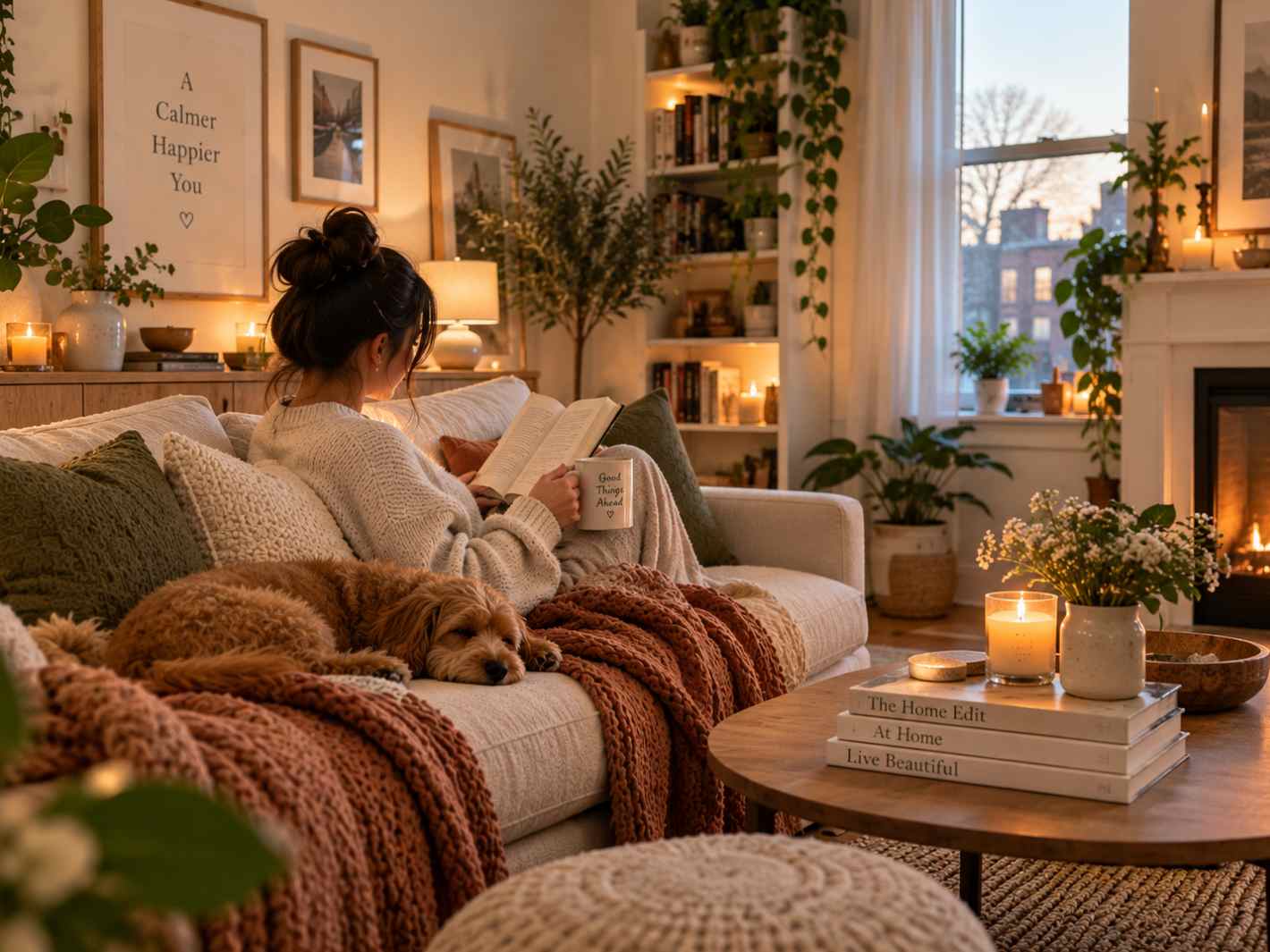
15. Create a Calm Living Room
The living room often becomes a collection point for everyday clutter.
Simplify it by focusing on:
- comfortable seating
- one main rug
- warm lighting
- practical storage
- a few decorative pieces
Keep remote controls, cables, toys, and miscellaneous items inside drawers or baskets.
A calmer living room can make the entire home feel more peaceful.
16. Simplify Your Bedroom
Your bedroom should encourage rest.
Remove unnecessary objects from:
- bedside tables
- dressers
- floors
Focus on:
- comfortable bedding
- soft lighting
- organised clothing
- simple decor
A visually quiet bedroom can feel more relaxing at the end of the day.
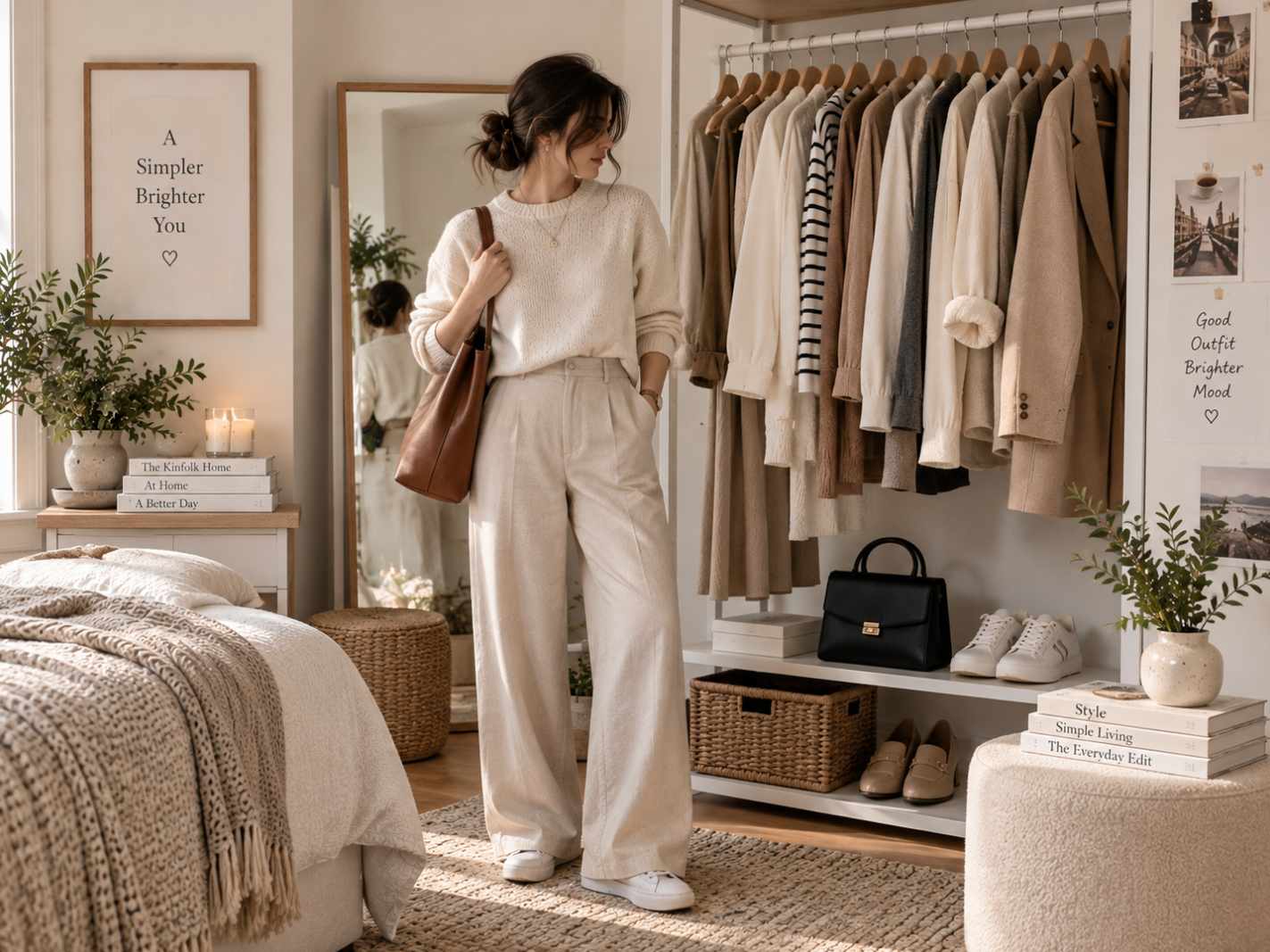
17. Edit Your Wardrobe
A crowded wardrobe can make mornings more stressful.
Go through your clothes and remove items that:
- no longer fit
- are uncomfortable
- are damaged
- have not been worn for a long time
Keep clothing that suits your actual lifestyle.
A smaller wardrobe can make choosing outfits easier.
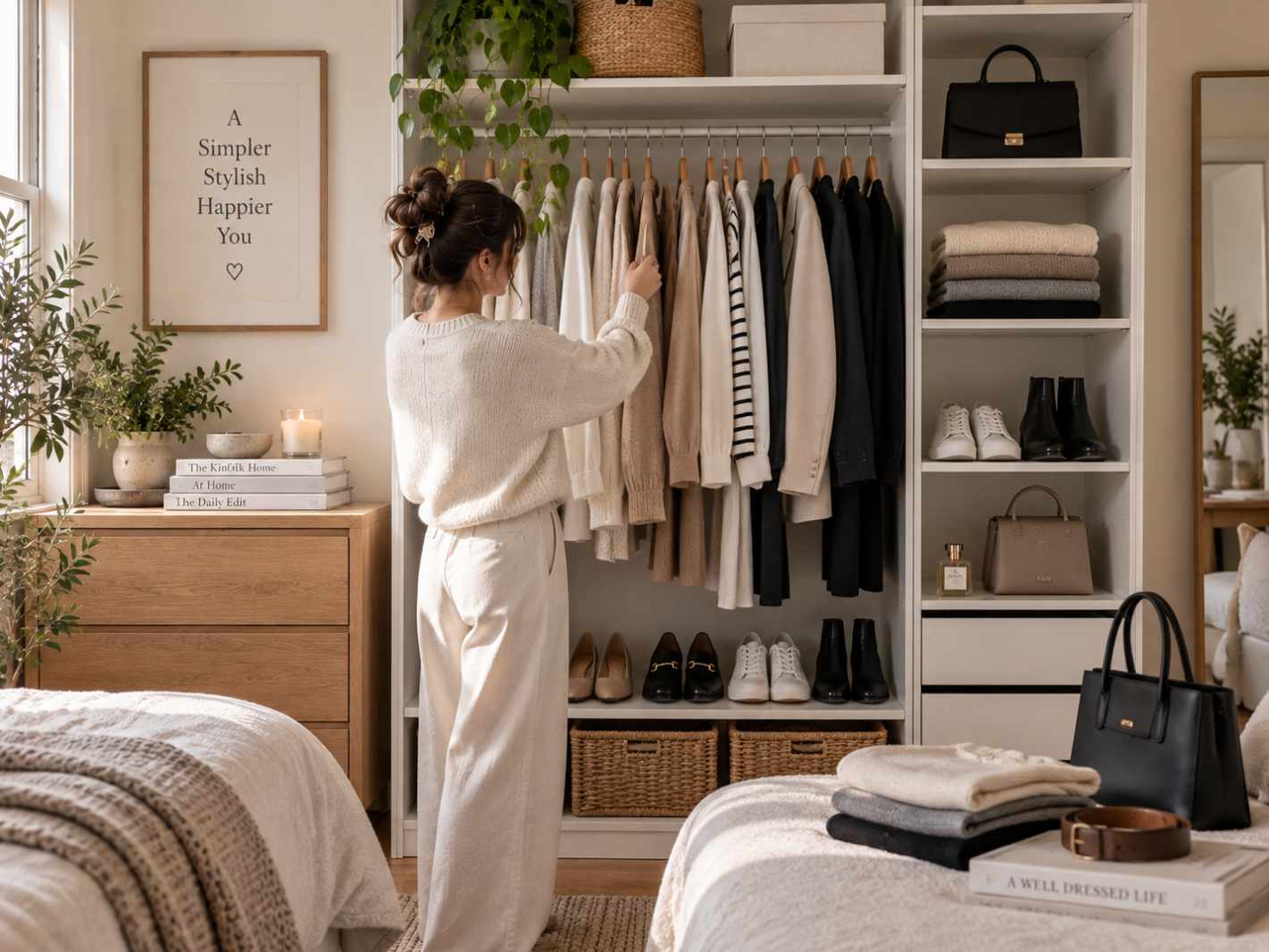
18. Consider a Capsule Wardrobe
You do not need to follow strict rules, but a capsule-style wardrobe can simplify clothing choices.
Focus on:
- versatile basics
- colours that work together
- comfortable pieces
- clothes you wear regularly
This can reduce both clutter and unnecessary shopping.
19. Simplify Your Kitchen
Kitchen clutter often builds up slowly.
Remove:
- duplicate utensils
- unused gadgets
- chipped dishes
- expired food
Keep frequently used items easy to reach.
Store less-used equipment higher up or inside cabinets.
Clear countertops can make even a small kitchen feel much larger.
20. Keep the Bathroom Simple
Bathrooms can quickly become crowded with products.
Go through:
- skincare
- makeup
- toiletries
- medications
- cleaning supplies
Remove expired or unused products.
Use:
- drawers
- trays
- baskets
to keep the remaining items organised.
21. Create a Simple Entryway
The entryway often becomes a drop zone.
Give everyday items a specific place.
Use:
- shoe cabinet
- hooks
- tray for keys
- small basket
A tidy entryway helps prevent clutter from spreading through the rest of the home.
22. Reduce Paper Clutter
Paper can accumulate quickly.
Common examples include:
- bills
- receipts
- manuals
- letters
- school papers
Sort paperwork into:
- action required
- important records
- recycling
Digitise documents when appropriate.
Avoid allowing paperwork to become permanent countertop decoration.
23. Organise Digital Clutter Too
Minimalism can extend beyond physical possessions.
Consider simplifying:
- phone apps
- email subscriptions
- computer files
- notifications
Digital clutter can create the same feeling of mental overload as physical clutter.
Removing unnecessary notifications can make everyday life feel quieter.
24. Create a Simple Cleaning Routine
A minimalist home should be easier to maintain.
Create a basic routine such as:
Daily:
- clear surfaces
- put items back
- wash dishes
Weekly:
- vacuum
- clean bathrooms
- change bedding
A small amount of regular maintenance prevents clutter from becoming overwhelming.
25. Use the One-In, One-Out Rule
When buying something new, consider removing something similar.
For example:
- new coat → donate an old coat
- new mug → remove one unused mug
- new cushion → replace an old cushion
This helps prevent possessions from gradually accumulating again.
26. Buy More Slowly
One of the most important minimalist habits happens before an item enters your home.
Before buying, ask:
- Do I genuinely need this?
- Where will I store it?
- Will I still like it in a year?
- Am I buying it because it is discounted?
Waiting a day or two before making non-essential purchases can reduce impulse buying.
27. Stop Buying Storage for Everything
Storage products can be useful, but they can also hide the real problem.
Before buying:
- bins
- baskets
- organisers
- cabinets
declutter first.
You may discover that you need less storage than you thought.
28. Keep Your Home Functional
A peaceful home should be easy to live in.
Do not create a minimalist room that looks beautiful but is inconvenient.
Keep:
- everyday items accessible
- comfortable furniture
- practical storage
- useful lighting
Good minimalism should make life easier.
29. Create a Place to Relax
A peaceful home needs somewhere you can genuinely slow down.
Create a simple relaxation area with:
- comfortable chair
- soft lamp
- small table
- blanket
Use it for:
- reading
- tea
- music
- quiet time
This can be especially valuable in busy households.
30. Reduce Bedroom Technology
If possible, reduce unnecessary electronics around the bed.
You might:
- charge your phone farther away
- remove the television
- keep laptops off the bed
This can make the bedroom feel more clearly associated with rest.
31. Use Lighting to Create Calm
Minimalist homes do not need to feel cold.
Warm lighting can add softness.
Use:
- table lamps
- floor lamps
- bedside lamps
- candles
Avoid relying entirely on one bright ceiling light.
Layered lighting creates a much more comfortable atmosphere.
32. Add Plants Without Overcrowding
Plants can soften minimalist interiors and introduce natural colour.
Choose a few rather than turning every surface into a plant display.
Good options include:
- snake plants
- pothos
- ZZ plants
- olive trees
Allow each plant enough space to become part of the room.
33. Create Visual Consistency
A peaceful home often feels connected from room to room.
Repeat similar:
- colours
- wood tones
- fabrics
- finishes
You do not need every room to look identical.
A few repeated elements create continuity.
34. Avoid Trend Overload
Home trends change constantly.
Trying to follow every trend can lead to unnecessary spending and clutter.
Instead, choose:
- timeless furniture
- colours you actually enjoy
- materials that age well
Use trends only in small, easy-to-change details.
35. Choose Quality When It Matters
Minimalism can encourage buying fewer but better items.
You may decide to invest more in things you use constantly, such as:
- mattress
- sofa
- bedding
- cookware
- desk chair
Quality does not always mean expensive.
It means choosing something that suits your needs and is likely to last.
36. Keep Flat Surfaces from Becoming Storage
Empty surfaces tend to attract clutter.
Be especially careful with:
- dining tables
- kitchen islands
- dressers
- desks
Make it a habit to return items to their proper places instead of leaving them there indefinitely.
37. Create a Donation Box
Keep a small box or bag somewhere convenient.
Whenever you find something you no longer need, place it inside.
When the box is full, donate the contents.
This turns decluttering into an ongoing habit rather than a huge annual project.
38. Let Your Home Change with Your Life
Your needs will change over time.
The things that worked for:
- your first apartment
- life with young children
- working from home
may not suit your life forever.
Review your home occasionally and adjust it to match your current priorities.
39. Do Not Aim for Perfection
A peaceful home does not have to look perfect every day.
There will still be:
- laundry
- dishes
- packages
- everyday mess
Minimalism should reduce stress, not create new pressure.
The goal is a home that is easier to reset when life gets busy.
40. Focus on What You Gain, Not What You Remove
Minimalism is often described as getting rid of things.
A more useful perspective is thinking about what you gain:
- more space
- easier cleaning
- less visual noise
- simpler routines
- more intentional surroundings
The purpose is not to own as little as possible.
It is to create more room for the life you actually want.
How to Start a Minimalist Lifestyle Without Feeling Overwhelmed
If your home currently feels cluttered, do not try to transform everything immediately.
Start with a simple plan.
Week 1: Visible Surfaces
Clear:
- counters
- tables
- dressers
Week 2: Clothing
Sort:
- wardrobe
- shoes
- accessories
Week 3: Kitchen
Review:
- utensils
- appliances
- food storage
Week 4: Hidden Storage
Organise:
- drawers
- closets
- cabinets
Slow progress is often more sustainable.
Minimalist Living in a Small Apartment
Minimalism can be especially useful in smaller homes.
Focus on:
- vertical storage
- multifunctional furniture
- hidden storage
- fewer large furniture pieces
- clear walkways
In a small apartment, every item has a stronger visual impact.
Choosing fewer, more useful pieces can make the space feel significantly larger.
Minimalist Living for Renters
You can create a minimalist rental without making permanent changes.
Focus on:
- freestanding storage
- simple furniture
- neutral textiles
- removable hooks
- portable lighting
Avoid buying too much furniture specifically for one apartment.
Choose flexible pieces that can move with you.
Minimalist Home Essentials
There is no universal list of things every minimalist home needs.
However, practical basics may include:
- comfortable sofa
- quality bed
- dining or work surface
- good lighting
- practical storage
- simple textiles
Everything else depends on your lifestyle.
Someone who loves cooking may need more kitchen equipment.
Someone who reads every day may happily own hundreds of books.
Minimalism should be personal.
Common Minimalist Lifestyle Mistakes
Throwing Away Too Much Too Quickly
You may regret removing useful or meaningful things during an emotional decluttering session.
Take your time.
Buying a New “Minimalist” Aesthetic
Replacing everything you own with beige furniture is not minimalism.
Use what you already have whenever possible.
Hiding Clutter Instead of Reducing It
A beautifully organised cupboard can still contain many things you never use.
Declutter before organising.
Making Your Home Feel Empty
A peaceful home should still feel warm and personal.
Keep:
- art
- books
- photographs
- textiles
- meaningful objects
Comparing Your Home to Social Media
Minimalism looks different for every household.
Your home needs to work for your life, not for a photograph.
Final Thoughts
A minimalist lifestyle is not about achieving a perfectly empty home.
It is about becoming more intentional about what you keep, what you buy, and how your surroundings support your everyday life.
Start by reducing obvious clutter, giving everything a clear place, simplifying visual distractions, and choosing furniture and decor that genuinely serve you.
Over time, your home may become easier to clean, easier to organise, and far more peaceful.
The goal is not to have less for the sake of having less.
It is to create enough space — physically and mentally — for the things that matter most.